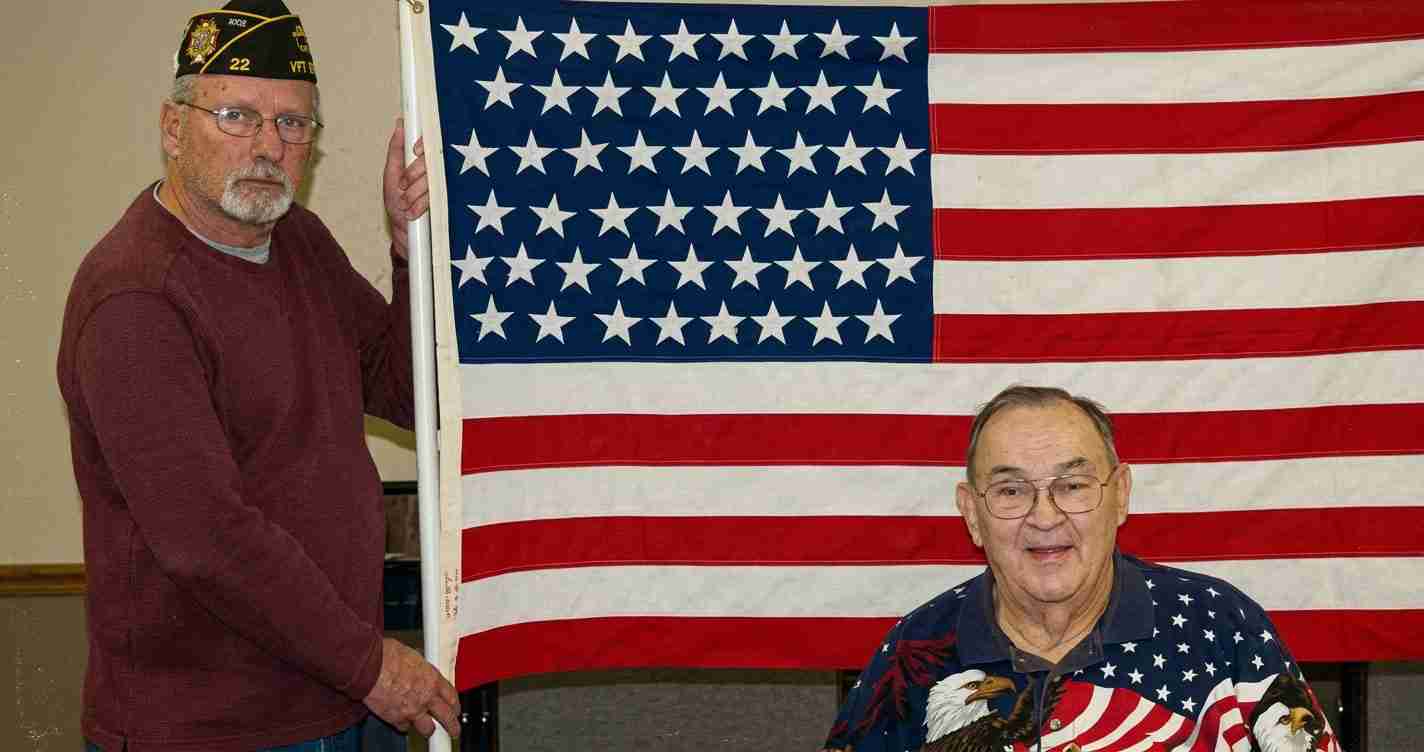
LANCASTER, Ohio, June 25 (DC Times Online) — A school project in Lancaster, Ohio, grew into a national symbol that, by later accounts, was flown over state capitols from Texas to Alaska.
Bob Heft said he was 17 when he made a 50-star U.S. flag as a high school history assignment. In a StoryCorps oral history, Heft said his teacher, Stanley Pratt, gave him a B- and told him, “If you don’t like the grade, get it accepted in Washington then come back and see me.”
Heft said he took the challenge seriously. The flag he made reflected a moment of change in the country: Alaska had become the 49th state in January 1959, and Hawaii became the 50th state later that year. That meant the country was about to need a new official flag.
How did a student project become the 50-star flag?
According to Heft’s own accounts, he sent his flag to President Dwight D. Eisenhower in 1959 and asked him to adopt the design for the nation’s new flag. In the sources that quote Heft, he said he had made and flown the first 50-star flag in the United States and that it was first flown on March 7, 1959.
StoryCorps says Heft later received a call inviting him to Washington, D.C., for a ceremony related to the flag’s adoption, and that the teacher later changed the grade to an A. Other published accounts say Heft also received a thank-you letter from Eisenhower’s chief of staff, Wilton B. Persons.
When did the flag become official?
The 50-star flag became the official U.S. flag on July 4, 1960. The date matters because it marks the point when Heft’s design moved from a student project and personal claim into the national standard.
Why do state capitols matter in this story?
This is where the flag’s travel history gets especially wide. Fox News reported that Heft’s flag was flown over at least 40 state capitol buildings from 1960 to 1962. The list in that report includes New York, California, Massachusetts, Michigan, Pennsylvania, Illinois, Mississippi, Alabama, Arkansas, Iowa, Utah, Nebraska and Alaska.
Fox News also reported a display at the Texas state capitol in Austin on Oct. 5, 1960. In that account, the flag flew for five hours before weather cut the display short. Texas Gov. Price Daniel said it would have been displayed all day except for rain and high wind that started around noon.
Heft’s home state was part of the same pattern. Fox News quoted Ohio Gov. Michael DiSalle as writing that he was “pleased to verify your story that yours was the first 50-star flag displayed in Ohio on Ohio property.”
What should readers take from the story?
The practical lesson is not about a travel service or a museum stop. It is about how a single object can move through public spaces and become part of a country’s shared history. The state capitols named in the accounts show how widely the flag traveled after adoption, and they give the story a map that stretches well beyond Ohio.
The sources provided do not include the full White House letters or a single archival record proving every display claim. They also vary on how many capitols or embassies the flag reached. But the core outline is consistent: Heft said he designed the flag as a teenager, sent it to Washington, and later watched it move from his hometown project to a national symbol flown in capitals across the country.