
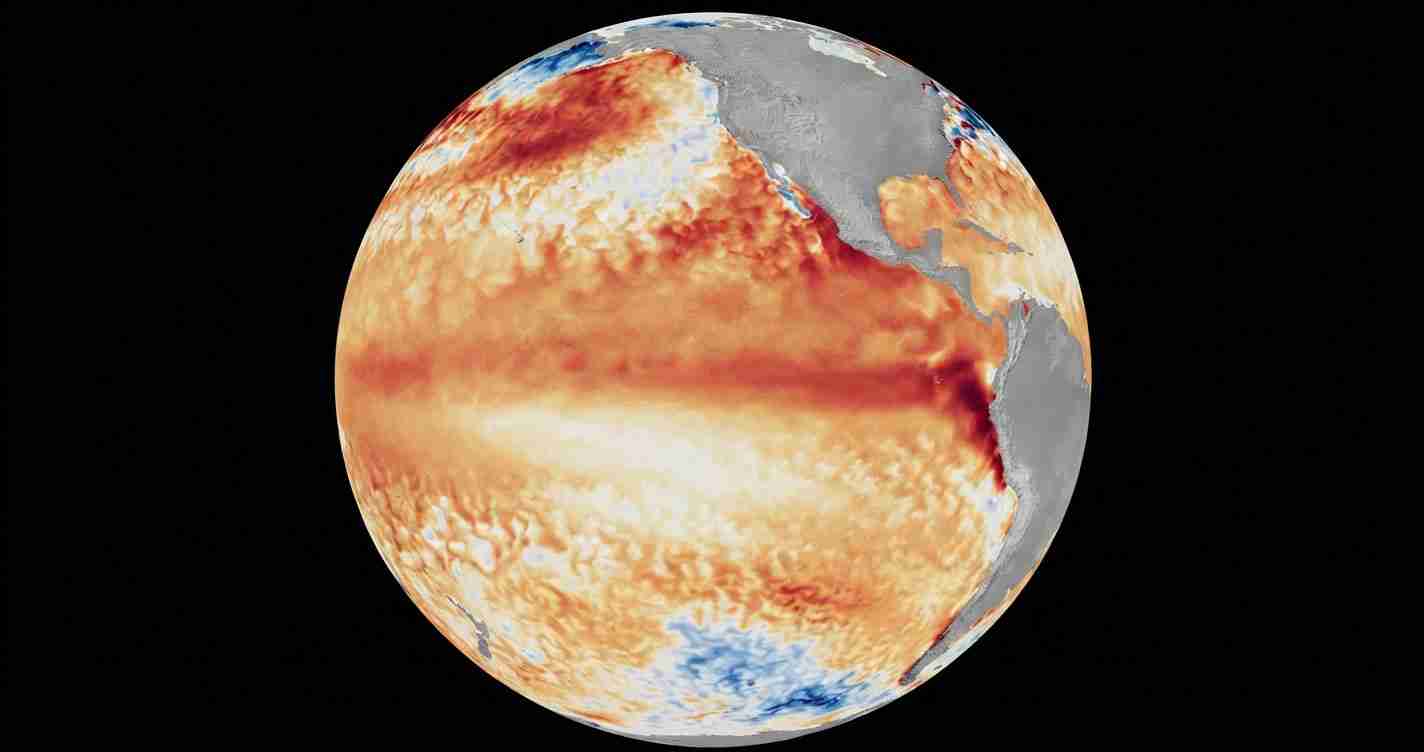
WASHINGTON, July 7 (San Diego News Online) — If you live in a coastal area or are planning for winter weather, check NOAA’s next updates: the Climate Prediction Center says El Niño conditions are already present and are expected to strengthen into the Northern Hemisphere winter 2026-27.
NOAA issued an El Niño Advisory on June 11 from its Climate Prediction Center, based in College Park, Maryland. In its diagnostic discussion, the agency said, “El Niño conditions are present and expected to strengthen into the Northern Hemisphere winter 2026-27.”
What El Niño is
El Niño is one phase of the ENSO climate cycle, which also includes La Niña and neutral conditions. It happens when sea-surface temperatures in the central and eastern equatorial Pacific Ocean run warmer than average.
NOAA said those warmer waters have spread across the central to eastern equatorial Pacific over the past month. The agency also said above-average sea-surface temperatures first appeared in the far eastern Pacific in early February, then increased across more of the region by mid-April.
To track the pattern, forecasters use indexes that measure water temperatures in key parts of the tropical Pacific. NOAA said the latest weekly Niño-3.4 index was +0.7 degrees Celsius. The Niño-4 index was also +0.7 degrees Celsius, and the Niño-1+2 index was +2.1 degrees Celsius.
Why NOAA is watching it closely
NOAA’s forecast is not just saying El Niño is present. It says the pattern is likely to get stronger.
The Climate Prediction Center said its model guidance, including the North American Multi-Model Ensemble and the NCEP CFSv2 model, points to further strengthening through winter. The agency said there is a “63% chance of a very strong El Niño during November-January.”
That does not mean every place will get the same weather. El Niño is a broad climate pattern, not a storm. But it can shift winter weather patterns, and NOAA says it can affect conditions in many parts of the United States.
NOAA’s Ocean Service says one possible effect is more high-tide flooding in some locations along the U.S. coast. That is why people in flood-prone areas are often told to pay closer attention to seasonal outlooks when El Niño is developing.
What to do now
For most people, the main step is simple: watch NOAA’s seasonal updates and your local forecast office, especially if you live near the coast or depend on winter travel, agriculture or flood planning.
The exact impacts will depend on how strong El Niño becomes and where you live. NOAA’s current message is clear, though: the Pacific has entered El Niño conditions, and the odds favor a stronger event by winter 2026-27.
