
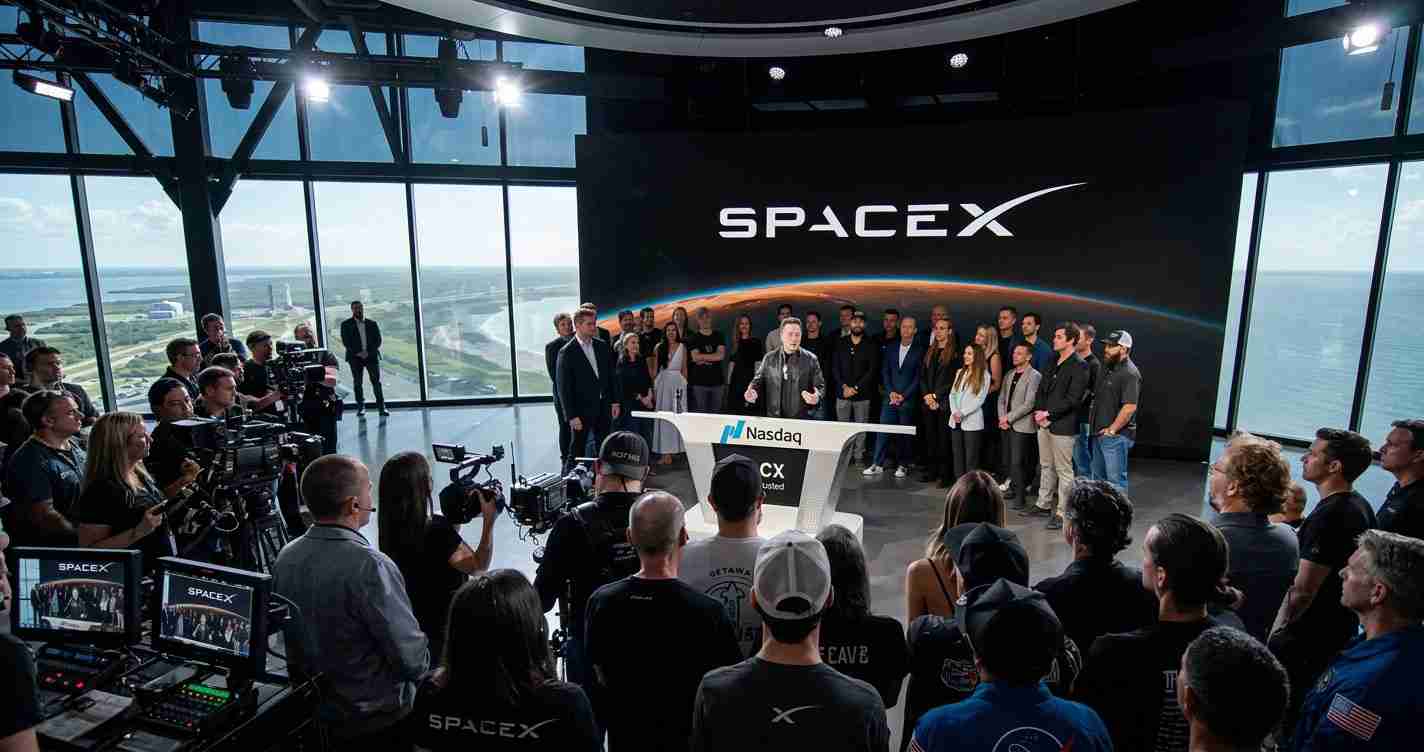
NEW YORK, June 13 (Our New York News) — SpaceX’s first day as a publicly traded company converted one of the world’s largest private fortunes into a market-priced asset, with Nasdaq trading data and wealth-index estimates showing Elon Musk crossing the $1 trillion net-worth mark after the rocket and satellite company’s June 12 debut.
The company began trading on the Nasdaq under the ticker SPCX after pricing its initial public offering at $135 a share, according to offering terms attributed to SpaceX and reflected in market trading. The IPO raised $75 billion. Shares opened around $150, climbed as high as about $176.50 during the session and closed near $161, according to Nasdaq trading data cited in market reports.
Those prices put SpaceX’s market value above $2 trillion by the end of its first trading day, up from an IPO valuation reported around $1.77 trillion to $1.8 trillion. The change had its largest effect on Musk, SpaceX’s founder, because he retained a large stake in the company.
Forbes and Bloomberg wealth calculations placed Musk’s total net worth at roughly $1.05 trillion to $1.11 trillion after the trading debut. Estimates of his SpaceX stake alone varied by price point and methodology. At or near the IPO price, market calculations put the holding at roughly $688 billion to $690 billion. Using higher first-day trading prices, estimates rose into the mid-$700 billion range and, in some calculations, approached $800 billion.
The figures are not cash payouts. They are estimates based on public share prices, reported ownership and options, and the value of Musk’s other holdings, including Tesla. They can change with the stock price. The records reviewed establish the IPO price, trading range and broad valuation effect; they do not establish one final, uncontested number for Musk’s ownership percentage or voting control.
That distinction matters for public investors who bought into SpaceX above the IPO price, for existing shareholders whose stakes were repriced by the public market and for employees or other insiders whose holdings may be tied to share value. The debut also made SpaceX a new public-market gauge for investor demand in commercial rockets, satellites and space-based data infrastructure.
Musk said SpaceX was going public to fund plans for satellites and data centers in space and, ultimately, a human settlement on Mars, according to a statement reported by The Associated Press. SpaceX was established in 2002.
The evidence trail begins with the offering terms. SpaceX priced the IPO at $135 a share on June 11, according to the company announcement and offering terms described in market reports. The next day, Nasdaq trading data showed the stock opening around $150, about 11% above the IPO price. During the session, shares reached about $176.50 before closing near $161.
A closing price near $161 represented a first-day gain of about 19% from the IPO price. Based on the reported share base and trading price, market calculations put SpaceX’s public value above $2 trillion at the close. That public valuation was the basis for the new wealth estimates, not a separate company appraisal.
The wealth estimates also depend on how analysts count Musk’s shares, options and other assets. Forbes-based calculations cited in market coverage put Musk’s SpaceX position at roughly $688 billion at the IPO price. Fox Business reported an estimate near $690 billion. Bloomberg-based analysis cited by the BBC put his SpaceX stake higher when using later trading prices. Other market estimates rose further when measured near the day’s higher prices.
The exact ownership and control picture is less clear from the available record. Several accounts of offering-related materials described a dual-class or special share structure that left Musk with outsized control. But the reported figures conflict, including different estimates of his ownership percentage and voting power. Because the underlying prospectus or share-count filing was not available in the reviewed records, this article does not state one exact ownership or voting figure as settled fact.
The valuation also has a disputed side. Morningstar analysts, described in AP and PBS accounts as independent of investment-banking fees, valued SpaceX at about $780 billion before the debut and called the IPO “significantly overvalued.” That estimate was far below the IPO valuation and less than half the value implied by first-day trading.
The gap shows the central question for investors: whether public-market demand for SpaceX’s growth plans supports a valuation above $2 trillion, or whether the first-day price reflected scarcity, enthusiasm for Musk-linked companies and expectations not yet proven in public filings available for review.
No regulator action, court record or enforcement proceeding was identified in the reviewed material. The available documentation is market-based: IPO pricing terms, Nasdaq trading data, wealth-index estimates from Forbes and Bloomberg, Musk’s stated rationale for the offering and Morningstar’s independent valuation view.
For New York’s financial markets, the SpaceX listing added one of the highest-profile private technology and aerospace companies to public trading. For Musk, it gave the market a daily price on a SpaceX stake estimated near $690 billion at IPO terms and higher at first-day trading levels, enough for Forbes and Bloomberg calculations to place his total fortune above $1 trillion.
